
Cornerstoneगुरुकुल
Book a visit

Individual focus

No tuition needed.

A teacher reads each wrong answer, finds the exact step a child is stuck on, and teaches that step in a small group, inside the school day.

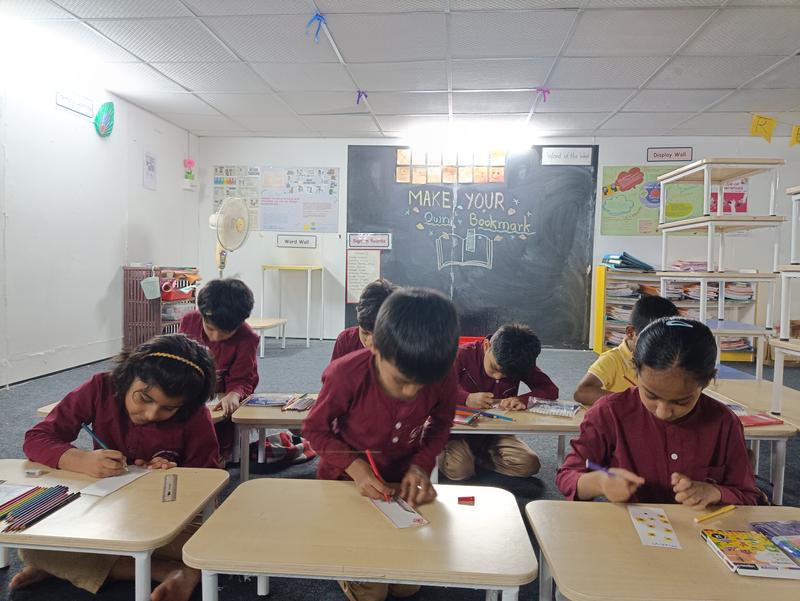
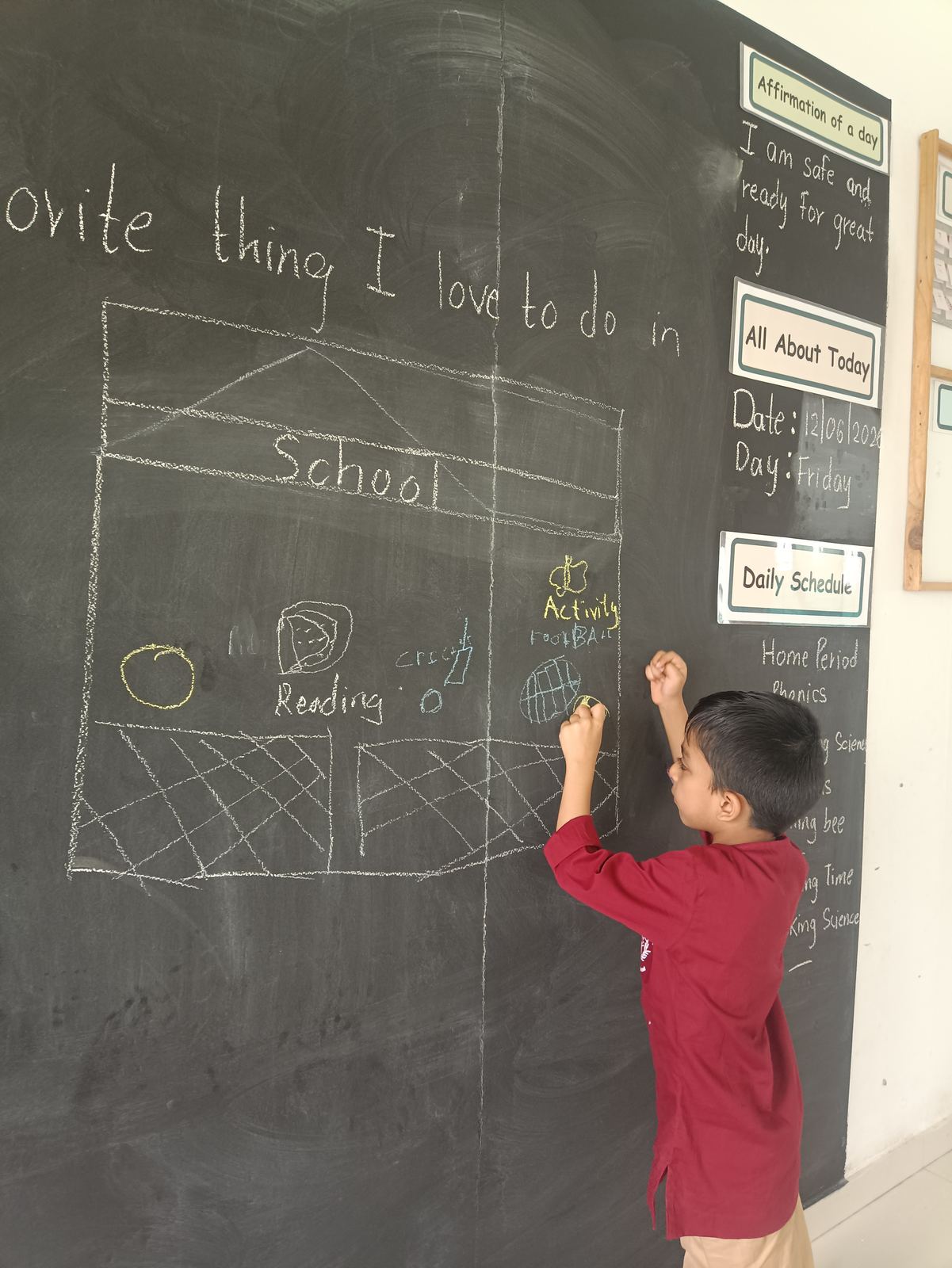
A child in a maroon kurta writes on the blackboard in her own hand

How it comes together

One map for each child

Numbers from the sheets. Notes from every adult who sees your child. Tap any box to open it.

What goes in

Numbers

  • A test should find the gap, not hand out a grade.

    What we write down
    Which one skill each question tests, and whether the child got it, got it with help, or not yet.
    How it adds up over the years
    Every sheet adds a dot to that skill’s line. After a year you can see how long a skill took to land. After four, you can see which kinds of skill come easily to this child, and which need a longer run-up.
    Who
    The class teacher
    How often
    A weekly sheet, and a check every Friday
    • TodayPaper sheets, set at each child’s level by hand. Every question is tied to one skill.
    • Being builtA QR code on each sheet and each child. Handwriting is read by a machine, and every mark it is unsure of goes to a teacher.
    • TodayMaths is marked by exact code, never by AI.
  • A wrong answer is information. So we say what kind of wrong it is.

    What we write down
    For each wrong answer, which of five things went wrong: an old skill that never settled, the idea itself, the method, using it in real life, or reaching above grade.
    How it adds up over the years
    A child who misses the same kind of step again and again shows a pattern. A child who clears the question above grade shows they are ready for more. Both go into the record and travel with the child to the next grade.
    Who
    The class teacher. A coordinator checks the picture every fortnight.
    How often
    Every Friday
    • Foundational
    • Conceptual
    • Procedural
    • Application
    • Stretch
    • TodayEach question says what kind of thinking it asked for, so the result shows the exact step a child missed.
    • TodayThe next sheet aims at the missed step, not at the whole topic.
  • Learning is a ladder. A parent should be told which rung their child is on.

    What we write down
    The rung the child is on in each skill: place value, subtraction facts, exchanging a ten, and so on.
    How it adds up over the years
    Each year’s ladder starts where last year’s ended. No teacher starts from a blank page, and no child repeats what they already know.
    Who
    The class teacher, marking step by step
    1. Place value
    2. Subtraction facts
    3. Exchanging a ten · the step now
    4. Exchanging across a zero
    • TodayAsk a teacher what your child is working on next, and why. A teacher can tell you.
    • Being builtA skill list, with the step each child is on marked against it.

Observations

  • The adult who sees a child most holds the best information about them. Write it down the same day, as plain facts.

    What we write down
    What the child did, and what happened just before and after it. Only what the adult saw, good moments included. Never a label like “lazy” or “shy”.
    How it adds up over the years
    Each week a teacher reads the notes together and spots a pattern that no single day showed. Over months the notes become a record of how this child behaves when something is hard, when it is new, or when a friend is upset. Nobody has to remember it, because it is written.
    Who
    Every educator who teaches the child
    How often
    Daily
    Ira rushes. Takes 2 from 7 instead of exchanging a ten.
    A made-up example of a daily note
    • TodayA daily form: what led up to it, what the child did, what happened next. Only what the adult saw, good things included.
    • PlannedA short voice note instead of the form, turned into a record that a teacher confirms. One class has tried it.
  • Courage and teamwork show up on the field long before they show up on paper.

    What we write down
    Effort, nerve (does the child try the hard thing?), teamwork, and how the child takes a loss. Plus twelve fitness skills in Grades 1 to 3.
    How it adds up over the years
    A coach sees the same child season after season. A child who used to hang back and now asks for the ball is a change no test would catch. It goes into the map beside the maths.
    Who
    The sports teacher and coaches
    • TodayTwelve fitness skills are tracked in Grades 1 to 3.
    • PlannedA coach’s log of effort, nerve and teamwork.
  • Making and performing show what a child can do beyond what was asked.

    What we write down
    What the child makes beyond the prompt, whether they are willing to show it, and a portfolio of their work.
    How it adds up over the years
    A portfolio is the one record a child can read for themselves. Years of it show how a child’s skill and nerve have grown, and the child can look back and say, “I made that when I was seven.”
    Who
    The arts and music teachers
    • TodayFormative checks, and a portfolio of each child’s work.
    • PlannedEffort, nerve and teamwork logged, the way the coach’s log will do it.
  • You see what we cannot: how your child is when nobody is watching.

    What we write down
    What your child likes, finds tiring and does at home. Two or three questions at each meeting, and a yearly one-to-one call.
    How it adds up over the years
    Home holds half the picture and school holds the other half. Laid side by side over the years, a change at home is never a surprise at school, and the other way round.
    Who
    You
    How often
    At each meeting, and a yearly one-to-one call
    • TodayAt each meeting a teacher asks two or three questions: what your child likes, finds tiring, does at home.
    • PlannedWhat you tell us from home is kept in the map.
  • The child is the best witness to how learning feels.

    What we write down
    One line from the child, in their own words: what is hard, what they like, what they want to try next.
    How it adds up over the years
    A six-year-old’s line next to a ten-year-old’s shows how a child’s view of themselves changes. It is the part of the map the child owns.
    Who
    The child, to a teacher
    Long sheets make me tired. I like puzzles.
    A made-up example
    • PlannedA line from the child sits in the map, next to the numbers.
A teacher checks

Ira’s living map

A made-up child, Grade 2

Being built
Place valueSubtraction factsExchanging a tenReading aloudTeamworkkeep lookingSticking with itkeep looking
  • Still forming
  • Nearly there
  • Secure
  • Ready for harder

A level belongs to a skill, never to a child. Teamwork and sticking with it stay at “keep looking” until two adults have seen six moments.

A named adult confirms

What comes out

    • TodayThe exact step each child is stuck on, read from the wrong answer. Groups are made by hand.
    • PlannedGroups of children on the same step, regrouped every 6 to 8 weeks.
    • PlannedOne view of where every child is, every day, with less paperwork.
  • What is my child working on next, and why?
    The question to ask any teacher
    • TodayA note about the day in the parents’ app, a line in the home diary, a report and a meeting each term.
    • PlannedYour child’s map, in plain words.
    • PlannedA next step the child can say in their own words, taken from the map.

From notes to a report

A report card is a photograph. We are building a film.

A photograph shows one term. A film shows how a child moves. Everything above feeds one record, and that record is what you read as a report, term after term, year after year. Each day’s note is small. The line it draws over the years is the point.

  1. Every day

    Adults write down what they saw

    A few lines on what the child did and what led up to it. Facts, not opinions.

    Today
  2. Every week

    A teacher reads the week together

    A pattern shows that no single day showed: Ira rushes, but only when the sum is long.

    Today
  3. Every Friday

    A check at the child’s level

    It shows the exact step the child is on in each skill, not a mark out of ten.

    Today
  4. Every term

    A report and a meeting

    Where your child is now and what to work on next, in plain words. Never ranked against the class.

    Today
  5. Every year

    The year is closed and handed on

    Each skill’s level at year-end goes into the map. The portfolio goes to next year’s teacher, so nobody starts from a blank page.

    Being built
  6. Over the years

    One line from Nursery to Grade 10

    Your child’s own line, drawn skill by skill. When a child changes class or teacher, the story travels with them.

    Planned

Ira’s report, Grade 2, Term 2

Being built

A made-up child. The report is being built.

Where Ira is
Place value is secure. Subtraction facts are nearly there.
What changed since Term 1
Ira used to rush and take the small number from the big one. Now Ira stops and says what to exchange.
What the adults noticed
Teamwork and sticking with it: still looking. We have seen each only twice.
Next step
Exchanging across a zero.
Try at home
Ask Ira to explain one subtraction out loud, step by step.

One child, four years
Still formingNearly thereSecureReady for harderGrade 1Grade 2Grade 3Grade 4

A made-up child. Each dot is the level of one skill at the end of a year. A level belongs to a skill, never to a child.

“Over the course of three months, six months, one year, two years, three years, five years there is like a complete map getting created of a child.”

Nimish ShahCo-founder · Systems, technology and brand

Every adult who teaches your child adds to the same record, so each new teacher already knows them.

Facilitated AI

AI helps. A person decides.

AI does the practice and the spotting. A teacher decides what happens next. Tap a step.

    • Being builtA set of questions at the step the child is on. The child does the work.
    • TodayMental maths, handwriting and mastery tests are always done without AI.
    • Being builtIt reads handwritten sheets and spots the same slip coming back. A mark it is unsure of goes to a teacher, and each approval teaches it.
    • TodayToday the teacher reads the sheets and finds the step by hand.
    • PlannedOne view of every child, every day, so the paperwork shrinks and the time with children grows.
  1. A person decides here

    • TodayEvery AI-drafted rating on a report is checked by a teacher, and a senior teacher reads it last, before a parent sees it.
    • PlannedRegrouping every 6 to 8 weeks, chosen by the teacher.
    • PlannedA voice note turned into a record. A teacher confirms it first.

    The teacher’s choice sets the next practice, and the loop starts again at step 1.

  • AI drafts. A named adult confirms.
  • Nothing reaches a parent unconfirmed.
  • No ranks, and no comparing children.
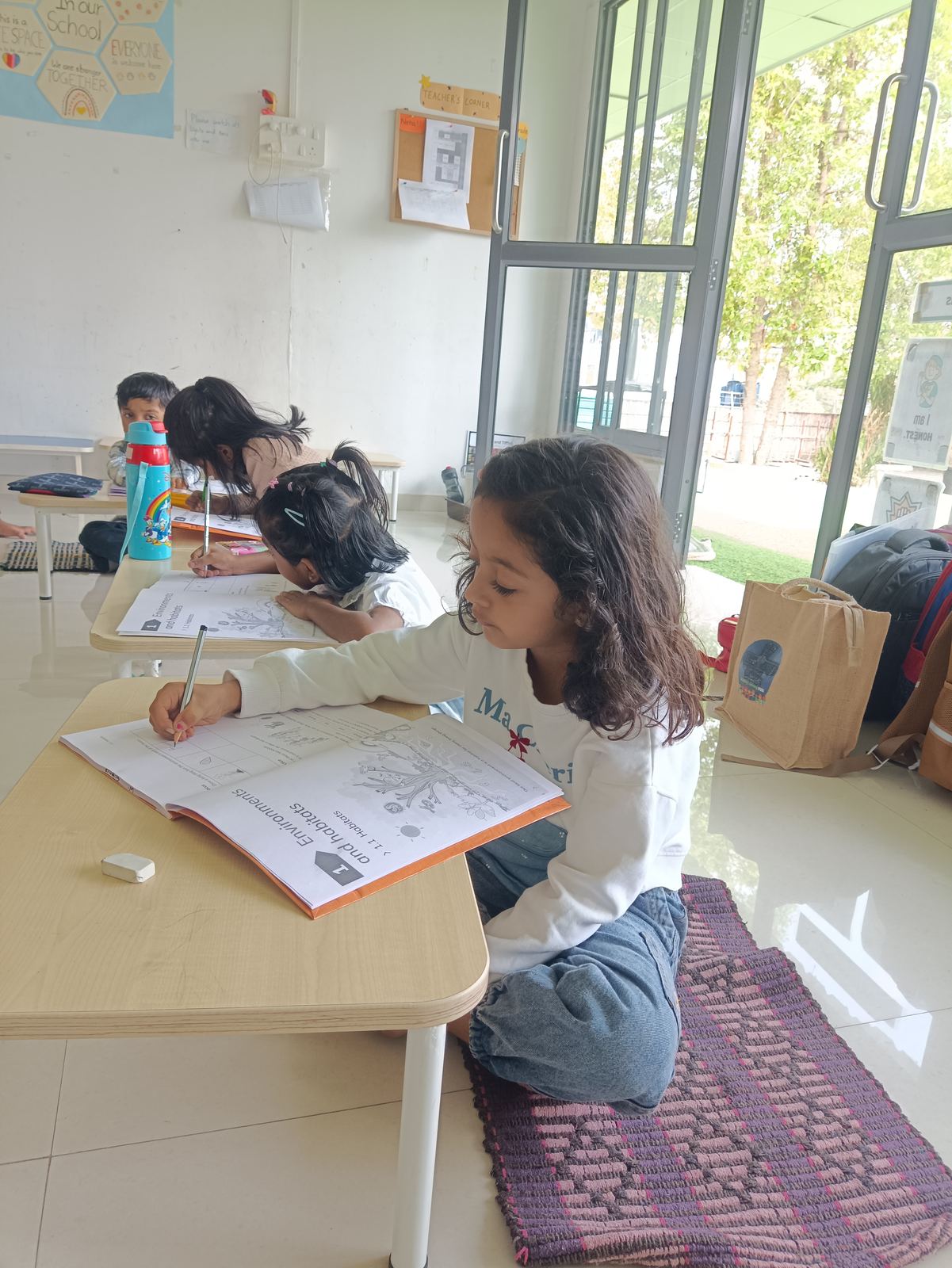
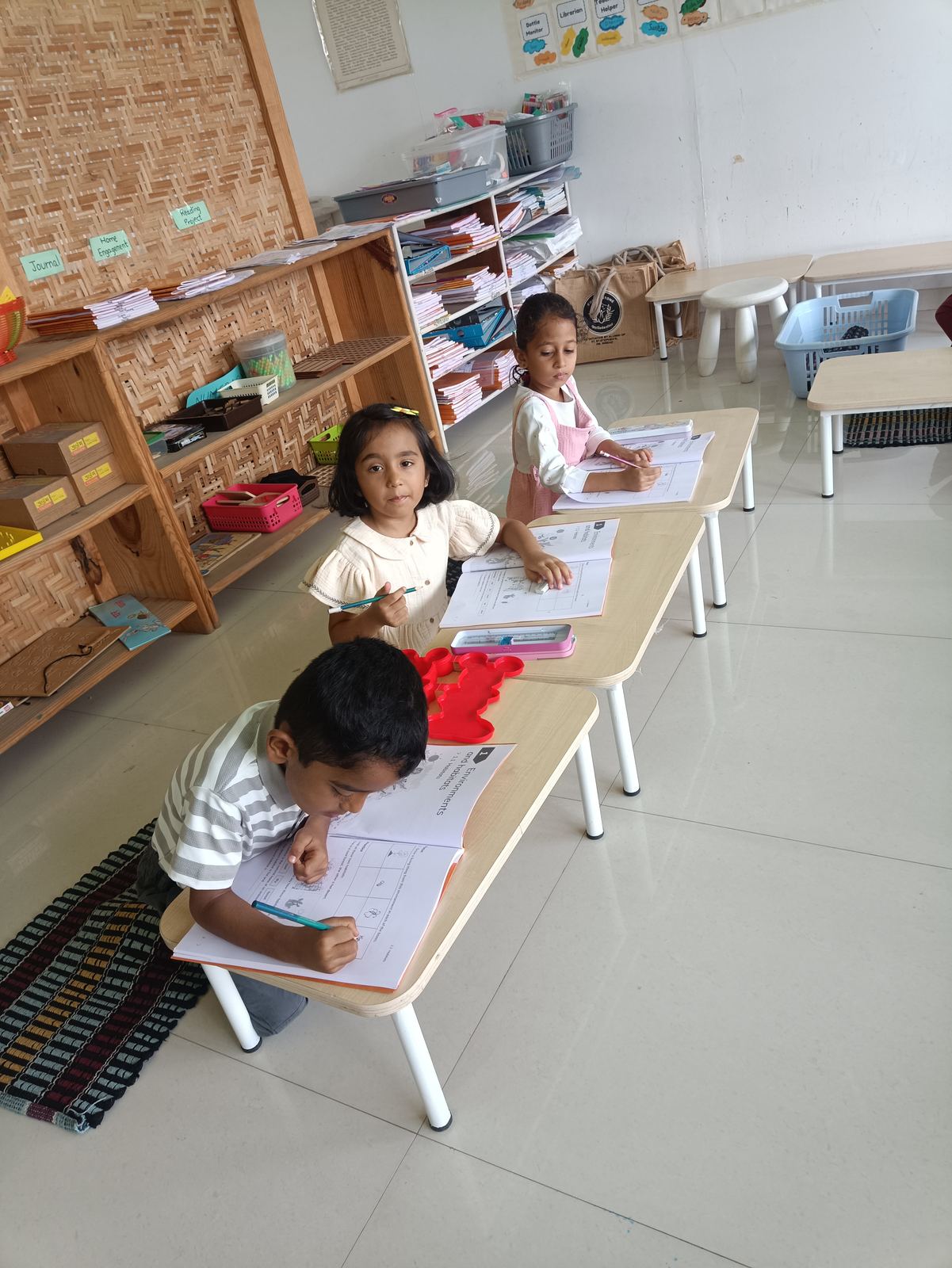
Three children write at a long low desk, each on their own sheet, in a bright classroom

A parent’s view

“The personalized attention that each student receives is remarkable, and the encouragement to explore their unique talents and potential has helped Ishita develop not only as a student but as an individual.”

Ishita’s parent · Grade 1

In their words

The three founders

Over the course of three months, six months, one year, two years, three years, five years there is like a complete map getting created of a child.

Nimish ShahCo-founder · Systems, technology and brand

Meri class two aur class nine same nahi dikh sakti, right? Kyunki school waise sochte hi nahi hai. School bacha sochte hai.

In English: My Class 2 and my Class 9 can’t look the same, because schools don’t think that way. Schools think child-first.

Akanksha RawatCo-founder · Academic lead

A child is taught at their level one day. The next day they put up a hand, and the teacher says, ‘What a good question.’ A small line like that changes how a child grows.

Aseem KhareCo-founder · Business and sustainability
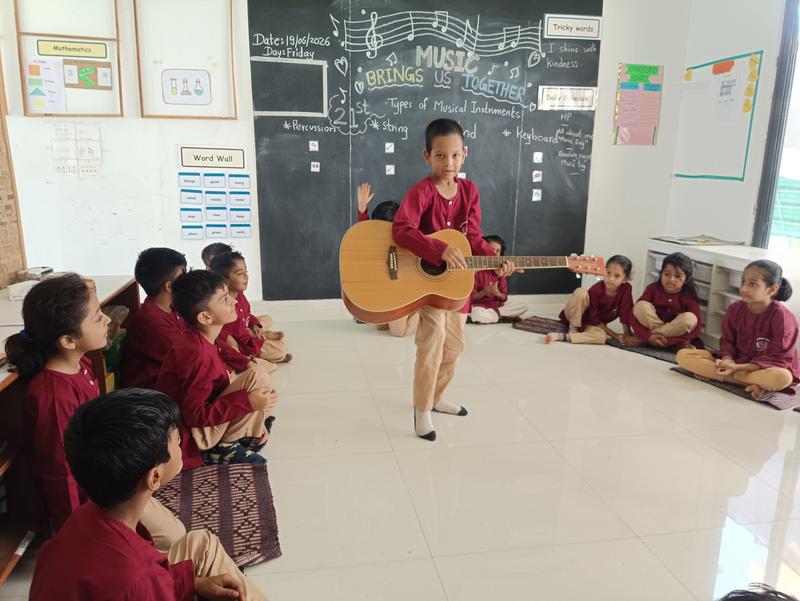
A teacher plays the guitar for children in maroon kurtas sitting on the floor

How you can check

Ask a teacher what your child is working on next, and why.

Book a visit

Visits at Gurukul: 45 minutes, up to three families at a time.